In a condo, a fan is a slab job
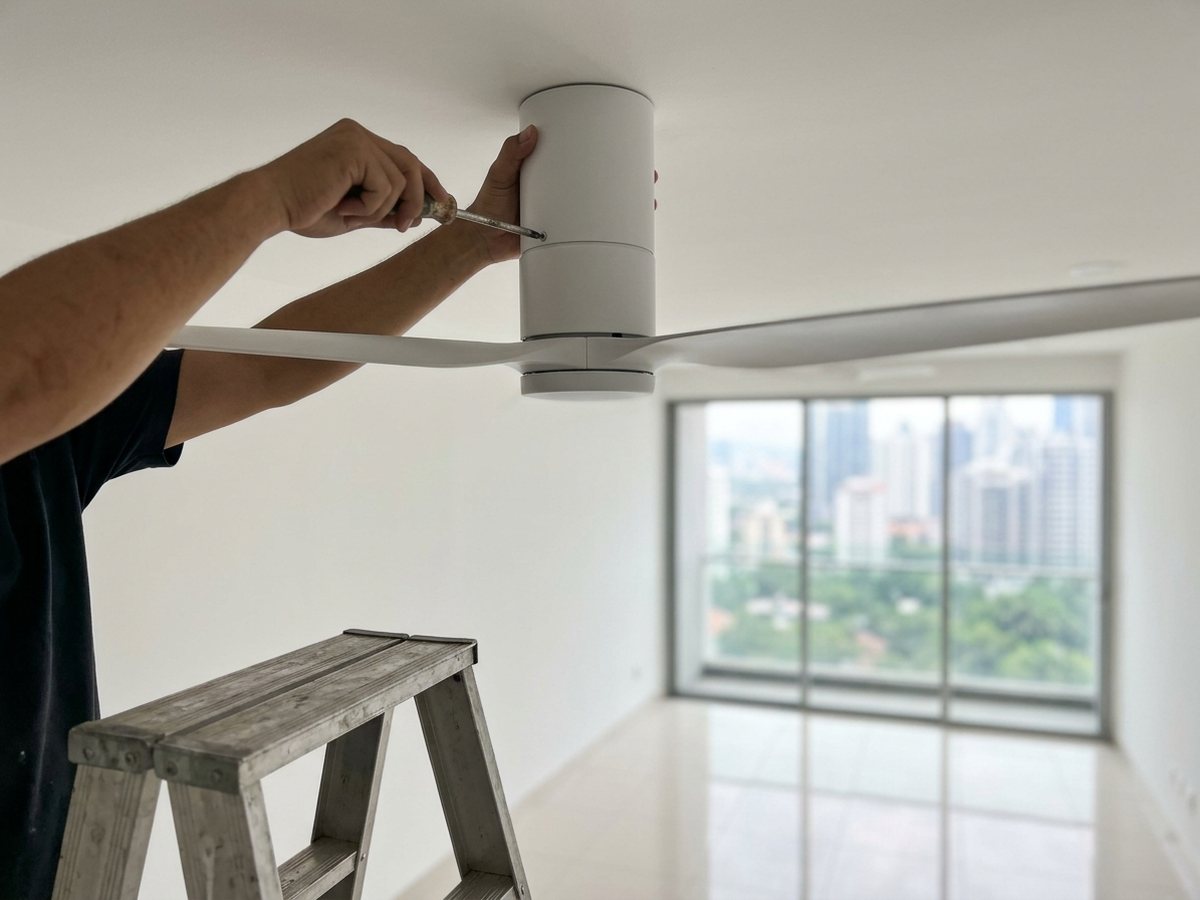
Many rooms in a Mont Kiara condominium have a plaster ceiling hung a little below the concrete slab; others show the bare slab. Plasterboard carries little weight, and a turning fan pulls on its fixing from every side. So the hook or bracket is anchored into the slab, the rod passes down through a hole in the plaster, and the canopy closes that hole.
A tenant wants moving air in a bedroom without running the air-conditioner. An owner in one of the 1990s or 2000s blocks along Jalan Kiara has an original fan that has started to tick. A buyer in a newer tower has bedrooms with a light point and nothing else.
Under a house roof
The top floor of a house is another matter. The ceiling there is usually board on a timber or metal frame beneath the roof, with no slab above. The fan is fixed to the roof structure, or to a proper support laid across it. Older boards can be brittle, so the hole for the rod is cut with care. On the ground floor of a two-storey house the ceiling is usually the slab of the floor above, and the job is the same as in a condo. A semi-detached owner in Sri Hartamas with a fan for every bedroom has both cases under one roof, so say which floor each room is on.
What the photos settle
- The spot on the ceiling from the doorway, with any beam, pelmet or tall wardrobe near it.
- What is there now: an old fan, a bare hook, a light, or a blank plate.
- The wall switch or regulator for that spot.
- The fan's box label: blade span, rod length, remote or wall control.
- The ceiling height, floor to plaster.
What is at the ceiling now
| Starting point | What the job involves |
|---|---|
| An old fan on a sound hook | Old fan down, hook and anchors checked, new fan hung and connected. |
| A hook and a fan point, no fan | Hook checked, fan hung. The rod has to suit the gap above the plaster. |
| A light point only | A new support goes into the slab, or onto the roof structure in a house. Whether the point and its switch suit a fan is checked first. |
A fan where there is only a light point
A light point has nothing to hang a fan from, so a support is drilled into the slab. The strata by-laws do not allow drilling within 300 mm of concealed pipes and conduits, and the cable to a ceiling point may itself run in a conduit. A detector goes over the area first, and the as-built plans at the management office are consulted where there is doubt.
A fan with a remote can often run from the supply the light had, and the wall switch then simply turns its power on and off. A fan and a separate light on separate switches usually means another cable. Whether the existing point suits the fan you chose is a wiring question, answered before the quote and not on the ladder.
How the visit goes
Power off, old fitting down
The circuit is switched off and tested. The old fan or light is lowered and set aside.
Check or make the support
An existing hook is examined for rust and movement. A new one is anchored into the slab after the detector pass.
Hang and connect
The rod is set so the blades clear the ceiling and sit well above head height. The safety cable, where the fan has one, is attached as its instructions show. Then the connections are made and the canopy closed.
Run and balance
The fan is run at every speed and watched for sway. Blades are adjusted if needed.
Wobble, ticking and hum
A wobble usually comes from the blades. One sits at a slightly different angle or height, or a blade screw has loosened. Less often the rod is not seated in its bracket or the hook has worked loose, and that is the case to rule out first. Ticking tends to be a loose screw or the canopy touching the rod. A hum at low speed can come from a regulator that does not suit the motor. A steady grinding suggests worn bearings, and usually a new fan.
Wall fans
A wall fan suits a kitchen, a yard, or a room where the slab cannot be drilled where you want the fan. Brick and concrete take plugs and screws. A lightweight partition needs anchors made for it or a fixing into its frame.
Wiring, the management and your landlord
Connecting a fan or changing its regulator is wiring work, which is regulated in Malaysia. Suruhanjaya Tenaga registers the electrical contractors and competent persons who do it. Ask who will do that part and what registration they hold. A fan that needs a new point, a new circuit or work at the distribution board is flagged before any quote.
In a strata building, renovation works need the management's written approval under the by-laws, and whether hanging a fan counts is the management's call. Many offices keep drilling to set times, so ask yours. The by-laws bind tenants too. If you rent, you also need your landlord's consent; your tenancy agreement says how.
What moves the cost
Whether a sound hook is already there. Ceiling height and the access it needs. The fan itself: models with lights and remotes take longer to assemble. On the same visit, dead downlights can be changed, and curtain tracks or a TV bracket can share the same drilling slot.
Questions about ceiling fans
Can a ceiling fan go where there is only a light point now?
Usually, provided two things check out. The slab, or the roof structure upstairs in a house, has to take a new hook or bracket, clear of concealed pipes and conduits. And the light point and its switch have to suit the fan, which is a wiring question. A fan with a remote can often use the supply the light had.
Do you take the old fittings away?
Yes, if you ask. Say so when you send the photos, so that removal is part of the quote. The old fan, its blades and the packaging from the new one can all go. If you rent, the old fan is usually your landlord's, so check before it leaves the unit.
Will the new fan work with the regulator already on my wall?
Often not. A fan sold with its own wall regulator should run on that one, and the old plate is changed for it. A fan with a remote wants a plain on-off supply, so an old regulator left in the line can cause humming and poor speed control. Changing the plate belongs to the wiring side of the job.